
Replacing coconut in a savory dish is not about finding a unique ingredient that ticks all the boxes. Coconut comes in several forms (milk, cream, oil, shredded) and serves distinct functions: cooking fat, creamy binder, and flavor enhancer. Precisely identifying the role that coconut plays in your savory recipe is the first step to choosing a suitable substitute.
Function of coconut in a savory dish: fat, texture, or aroma
Classifying substitutes by type of ingredient is not enough: it is the technical role of coconut in the recipe that determines the right replacement. Olive oil works well as a substitute for coconut oil in cooking, but fails completely if you are looking for the creaminess of a Thai curry.
Three functions rarely overlap in a single substitute:
- The cooking fat (coconut oil, solid fat at room temperature) can be replaced by a neutral vegetable oil or butter, depending on the desired smoke point.
- The creamy binder (coconut milk or cream) requires a thick, fatty liquid: oat cream, diluted cashew puree, or thick soy cream.
- The exotic aroma is the hardest to replicate. No substitute provides exactly the same sweet-tropical note, but some combinations (almond milk + lime zest) come close in a curry.
To explore these options further, Journal Global articles detail each alternative according to the type of savory recipe targeted.
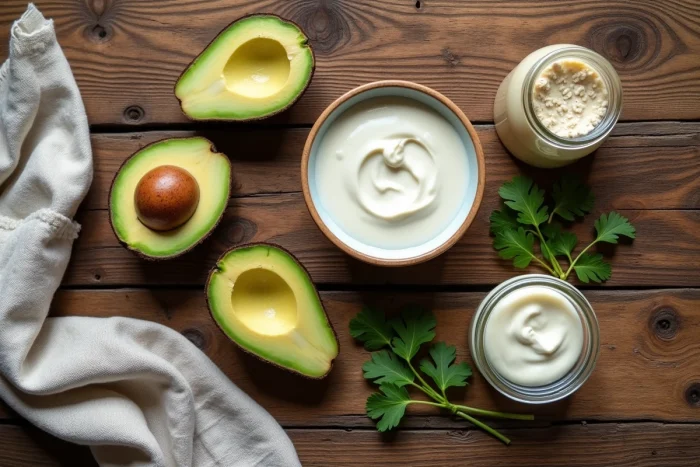
Comparison table of substitutes for coconut milk in savory recipes
Coconut milk is the most common form in savory dishes (curries, soups, sauces). The table below compares the main substitutes based on the criteria that matter in cooking: cooking stability, perceived fat content, and flavor profile.
| Substitute | Texture achieved | Flavor | Long cooking stability | Potential allergen |
|---|---|---|---|---|
| Oat cream | Creamy, slightly less thick | Neutral, slightly cereal-like | Good, does not curdle | Gluten (depending on brand) |
| Diluted cashew puree | Thick, very close to coconut cream | Mild, slightly sweet | Very good | Nuts |
| Soy cream | Fluid, thickens upon reduction | Neutral to slightly bitter | Fair, may curdle | Soy |
| Thickened almond milk (starch) | Medium, requires a thickener | Subtle, sweet almond | Fragile without thickener | Nuts |
| Plain plant-based yogurt | Thick, marked acidity | Tart | Low (added at the end of cooking) | Variable depending on base |
The diluted cashew puree in hot water stands out for curries and long soups. Its fatty texture and stability at boiling make it the most reliable substitute for prolonged cooking.
Oat cream and cashew puree: the recommended duo in allergen-friendly catering
In collective catering, homemade blends based on oat cream enriched with cashew or sunflower seed puree help avoid both the “exotic nut” allergen and traces of coconut, while maintaining the expected creaminess in sauces.
On the other hand, soy cream is less suitable for long cooking: it can develop a floury texture after more than twenty minutes on low heat, which makes it more suitable for quick sauces or finishing dishes.
Replacing coconut oil in savory cooking: smoke point and residual flavor
Virgin coconut oil adds a noticeable aroma in a stir-fry or wok. Deodorized coconut oil, on the other hand, serves only as a solid fat at room temperature. The choice of substitute depends on this distinction.
For a stir-fry or wok over high heat, canola oil or peanut oil can replace coconut oil without altering the recipe. Their higher smoke point even offers a technical advantage for high-temperature cooking.
For marinades and preparations where coconut oil serves as a semi-solid fat (spice coating, homemade curry pastes), butter works for non-vegans. As a plant-based alternative, a palm oil-free margarine provides a comparable result in consistency.

Shredded coconut in savory dishes: garnish, breading, and alternatives
Shredded coconut is used in some Asian and African savory dishes as a garnish or breading. Its role is twofold: crunchy texture and a light sweet note.
Three options work depending on the use:
- For a crispy breading, panko breadcrumbs mixed with toasted sliced almonds replicate the crunch without the coconut flavor.
- For a chutney or sambal, toasted sesame seeds provide a similar grainy texture with a flavor profile that pairs well with spices.
- For a garnish on a dry curry, crushed and lightly toasted cashews effectively replace shredded coconut, with a rounder taste.
The environmental argument that changes the game
A 2023 report from the NGO World Animal Protection documents the significant increase in global demand for coconut, associated with biodiversity issues and working conditions in producing countries. This observation drives some chefs to prioritize local fats: canola oil, oat cream, nut purees produced in Europe.
Choosing a local substitute is no longer just about taste or allergy, but also about ecological considerations. French canola oil or oat cream made in Europe have a significantly lower carbon footprint and land pressure compared to imported coconut.
The ideal substitute therefore depends on three variables: the desired technical function, the allergenic profile of the diner, and the sourcing logic. A cashew puree for creaminess, canola oil for cooking, sliced almonds for crunch: these three ingredients cover almost all savory uses of coconut.