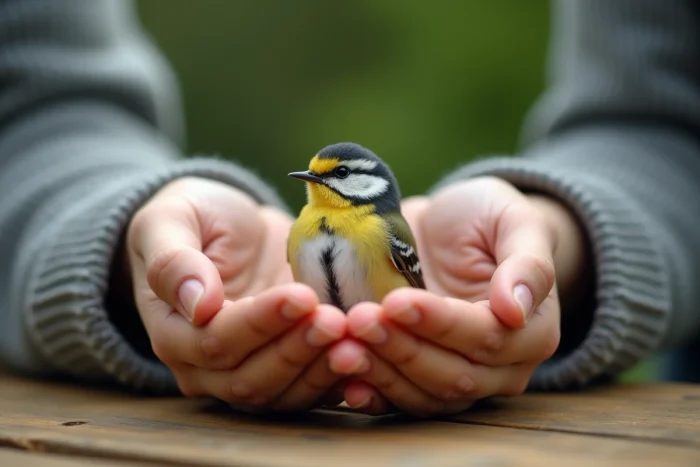
A baby great tit on the ground does not always mean a chick in distress. In this species, young ones sometimes leave the nest before they can fly, and the parents continue to feed them on the ground for several days. Knowing how to distinguish a chick in real danger from a young one in a normal phase of independence determines all subsequent decisions.
Naked chick or fledgling: two situations, two reactions
The first thing to observe is the plumage. A naked chick or one covered only in down, with its eyes still closed, is a nestling that has fallen accidentally. Without warmth or parental food, its survival is measured in hours.
A young bird covered in feathers, able to hop and grip a branch, is probably in the process of leaving the nest on its own. Its parents are nearby, even if they remain invisible. In this case, picking it up interrupts a normal learning process.
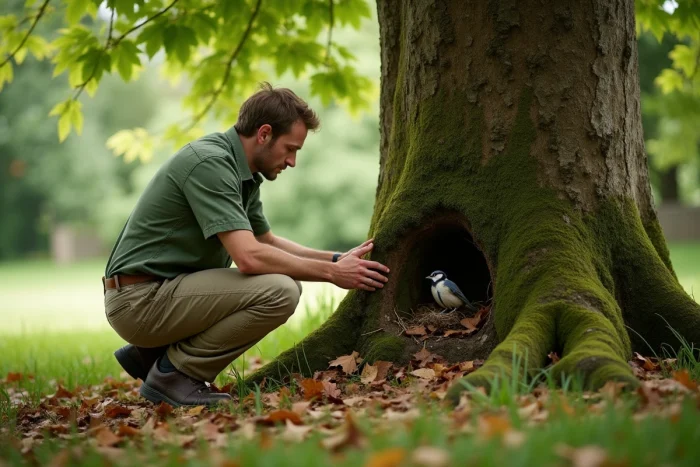
If the chick is naked and the nest is accessible, the best action is to place it back in the nest. Contrary to popular belief, touching a chick does not cause rejection by the parents. Great tits have a very limited sense of smell. However, handling should be minimized to reduce the animal’s stress.
Knowing how to feed a baby great tit becomes relevant only when the nest is unfindable, destroyed, or when the parents do not return after several hours of distant observation.
Risk of imprinting: why the care center takes precedence over home feeding
The great tit is an insectivorous bird. Its metabolism requires precise intakes of protein, calcium, and vitamins that homemade mixtures do not cover. Feeding a chick with bread crumbs, milk, or sunflower seeds can cause severe deficiencies within a few days, or even rapid death.
The second problem is imprinting. This phenomenon refers to the irreversible familiarization of a bird with humans. A chick hand-fed for more than a few days loses its natural wariness, making it unfit for wild life and preventing any rehabilitation.
In recent years, LPO France and several regional rescue centers (like GORNA in Alsace) have clearly recommended transferring the chick to a care center as soon as possible. Feeding by an individual should only occur as an absolute last resort, while waiting to find a shelter.
To locate the nearest center, simply call LPO or contact a veterinarian. Some veterinary practices specializing in exotic pets (NAC) can also take care of a chick during the transfer.
Emergency feeding for a baby great tit awaiting transfer
If no rescue center can be reached immediately, temporary feeding can keep the chick alive for a few hours. The basic principle: replicate an insectivorous diet as closely as possible.
Usable emergency foods:
- Live mealworms, cut into small pieces for very young chicks. They can be found in pet stores, in the fishing or reptile sections.
- Insectivorous food for wild birds, available in some pet stores and from NAC veterinarians. This product offers a nutritional profile much more suited than homemade recipes.
- As a last resort, a mixture of crushed hard-boiled egg mixed with a few drops of water, given in very small amounts with fine tweezers or a stick.
Some foods are strictly prohibited:
- Bread, biscuits, or any cereal: great tits are insectivorous, and their digestive system does not process starch correctly at this age.
- Milk or dairy products, which cause severe digestive disorders in birds.
- Water poured directly into the beak, which risks entering the respiratory tract and drowning the chick.
The feeding frequency is high: a baby great tit demands food every twenty to thirty minutes during the day. It opens its beak spontaneously when hungry, which makes feeding easier.
Heat and temporary shelter before the care center
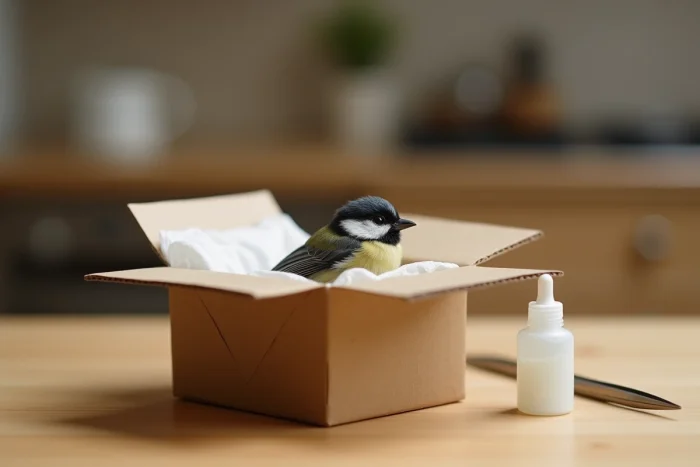
A naked chick loses its body heat very quickly. Placing it in a container like a shoebox, lined with paper towels or a soft cloth (no frayed cotton, as the threads can wrap around the legs), is enough to create a temporary shelter.
To maintain temperature, a warm water bottle wrapped in a cloth, placed under the container, serves as a heat source. The box should remain in a quiet place, protected from drafts, away from pets.
Do not attempt to make the chick drink directly. Hydration comes from moist food (worms, paste). Forcing water ingestion with a syringe or dropper frequently causes fatal choking in a bird of this size.
Maximum duration of home care
Beyond a few hours, the risk of deficiency and imprinting increases significantly. Care by an individual does not replace a rescue center equipped for gradual weaning and rehabilitation to wild life.
The great tit is a protected species in France. Keeping it without authorization constitutes an offense, even with good intentions. Only licensed care centers have the legal framework to house and care for a wild bird over time.
Return the chick to the nest when possible, contact LPO or a rescue center as soon as possible, and limit home feeding to the strict minimum for survival: these three simple actions give a baby great tit that has fallen from the nest the best chance of returning to its natural environment.