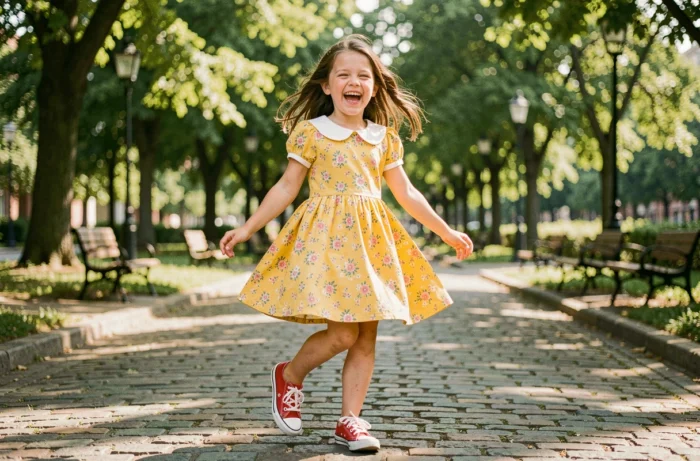
Children’s clothing is not just for covering up: it contributes to the development of autonomy, the expression of personality, and, on a more technical level, to the physical protection of the skin. Choosing fun and stylish pieces for a child involves balancing three parameters that are often treated separately: design, textile safety, and durability against daily wear.
PFAS and water-repellent treatments: what textile safety means for children’s clothing
When a garment has a water-repellent or stain-resistant finish, it has often undergone a chemical treatment. Among the substances used, PFAS (per- and polyfluoroalkyl substances) pose a documented health issue. Recalls of children’s clothing have been reported after PFAS were detected above permitted thresholds.
This point of vigilance directly concerns parents looking for practical pieces for outdoor play. A colorful raincoat or rain pants may seem ideal, but water resistance sometimes conceals a problematic treatment.
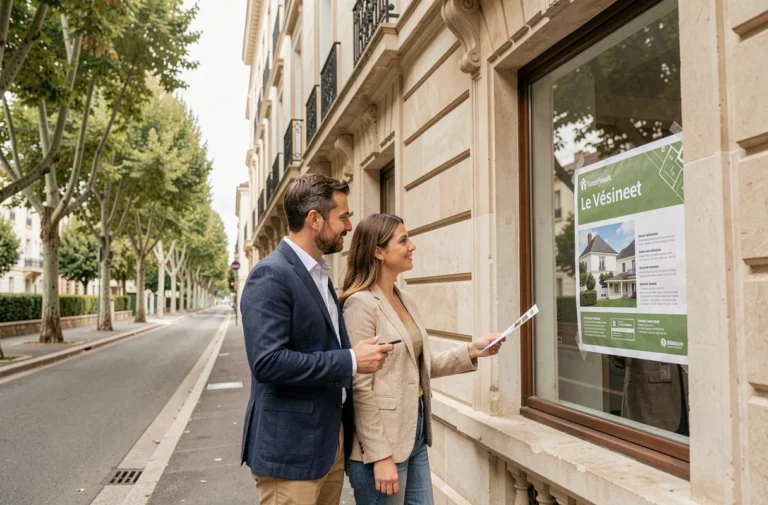
Since December 13, 2024, the European regulation on the general safety of products imposes identification and traceability obligations on consumer products, including clothing sold online. In practice, this means that a seller must be able to provide information about the composition and origin of the product. For online purchases of children’s clothing, checking that the seller displays this information remains the most accessible precautionary measure.
Brands like Bande de Gosses offer children’s collections that focus on fun designs while respecting textile composition requirements. Prioritizing this type of approach allows for a balance between style and peace of mind.
Fun children’s clothing: combining bright colors and durable pieces
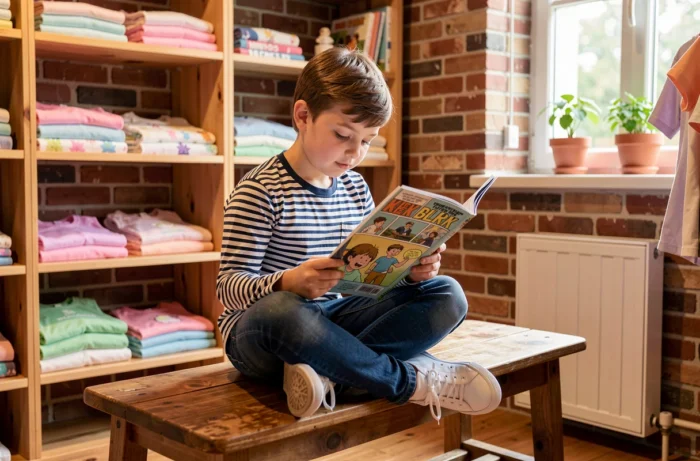
Fun in a child’s wardrobe comes from color, prints, and cuts that facilitate movement. A fun piece that tears after three washes is not fun for the family budget.
Choosing materials against wear
A patterned t-shirt will only last if the fabric weight is sufficiently dense. Cotton remains the reference for comfort, but not all cottons are equal. A fine jersey loses its shape quickly, especially at the knees of pants and elbows.
Denim and thick cotton canvas withstand ground play better. For tops, a recycled cotton-polyester blend offers a good compromise between flexibility and durability over time. The composition label is always worth a glance before purchase.
Prints and colors: what appeals to children without complicating daily life
Children naturally gravitate towards bold patterns: animals, vehicles, geometric shapes. The trap is accumulating too many distinctive pieces that do not coordinate with each other.
- Reserving bold prints for tops (t-shirts, sweatshirts) and keeping solid bottoms in complementary colors allows for multiple combinations
- Choosing two or three base colors for pants and skirts (raw denim, khaki, navy) ensures that each top will find a matching bottom
- Accessories (hats, patterned socks, headbands) add fun without blocking outfit combinations
This logic is not strictly minimalist. The goal is not to reduce the number of pieces but to increase the possible outfits with each purchased garment.
Second-hand and stylish children’s clothing: a circuit to consider
Second-hand is gaining ground in children’s textiles, even though it remains a minority in overall consumption. The interest in second-hand children’s clothing is not limited to price: it is also a way to find quality brand pieces at a reduced budget.
Brands that resell second-hand clothing themselves are gaining traction, according to data from the Refashion report relayed by TF1 Info. This circuit offers a concrete advantage for children’s clothing: the condition of the pieces is checked in-store before purchase.
A second-hand garment that has already been washed several times also has a little-mentioned advantage: any potential chemical residues (including PFAS in surface treatments) decrease with each wash. A second-hand piece that has gone through ten wash cycles offers a different textile safety profile than a new item straight from the factory.
Concrete criteria for choosing children’s clothing that is both fun and safe
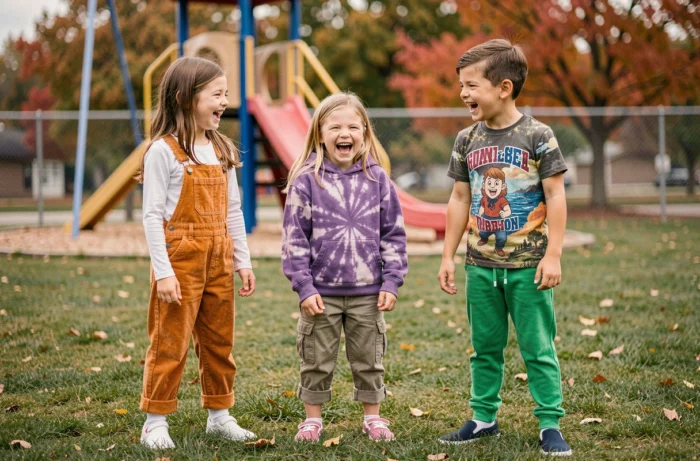
Summarizing the parameters to check in-store or on a website helps to quickly sort through options.
- Read the composition label: prioritize identified fibers (cotton, linen, wool) over vague names
- Check for compliance markings and traceability information required by European regulation
- Test closures: snap buttons and wide zippers are safer than small buttons for children under four
- Assess the strength of seams at stress points (crotch, armholes) by gently pulling on them
- Prefer colors dyed throughout the fabric to plasticized prints that crack and shed micro-fragments during washing
The fun criterion comes only after these checks. A dinosaur pattern on fragile fabric with loose seams will end up as a rag before the end of the term.
Dressing a child in a fun and stylish way does not require an extravagant budget or an oversized wardrobe. A few well-chosen pieces based on composition, durability, and color palette are enough to create a wardrobe where every morning, the child finds an outfit they like and can move freely in.