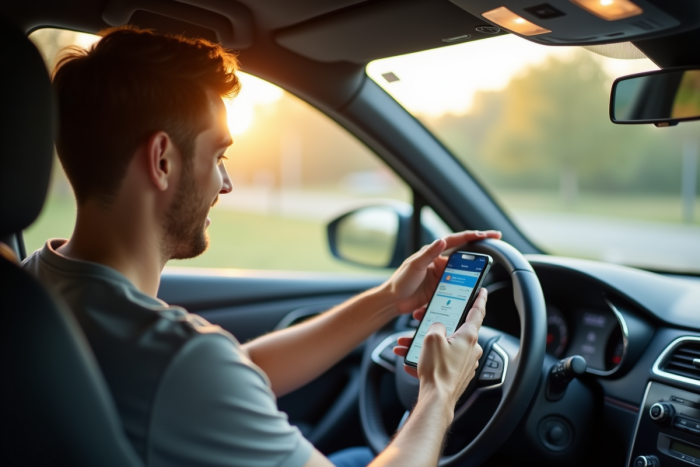
A driver whose braking is deemed too abrupt will often pay a surcharge, even if they have never caused an accident. However, the absence of claims is no longer enough to guarantee a favorable rate: the precise use of the vehicle, recorded in real-time, now weighs in the pricing balance. Insurance companies rely on embedded sensors to analyze each trip, cross-reference speeds, times, and habits, and adjust premiums based on unprecedented criteria. This evolution profoundly alters the relationship between drivers and insurers, while disrupting risk pricing.
How connected devices are transforming driver assessment by insurers
The methods used to classify drivers are radically changing with the strong emergence of connected devices in the automotive sector. What was once reserved for tech enthusiasts is now offered to a broad audience. Now, the connected vehicle and mobile app record every detail of the trip. Sudden braking, rapid acceleration, cornering—all are scrutinized, and every action at the wheel becomes recorded data.
Companies no longer settle for an annual report or sometimes vague declarations. They rely on a range of devices capable of continuously collecting and analyzing our behaviors. This system, known to many as pay how you drive, reshapes habits: two profiles will no longer have the same premium, even if their licenses were issued in the same year. It is no longer generalities that dictate the premium, but the reality of each trip.
This technological revolution is also increasingly accompanied by tailored offers. Drivers seeking a contract suited to their real lives turn to solutions such as Qlara auto insurance. This type of contract values personalization and responsibility, responding to a growing expectation from motorists. The promise of paying exactly according to usage is appealing, but it also raises new debates about the management and security of the collected data.
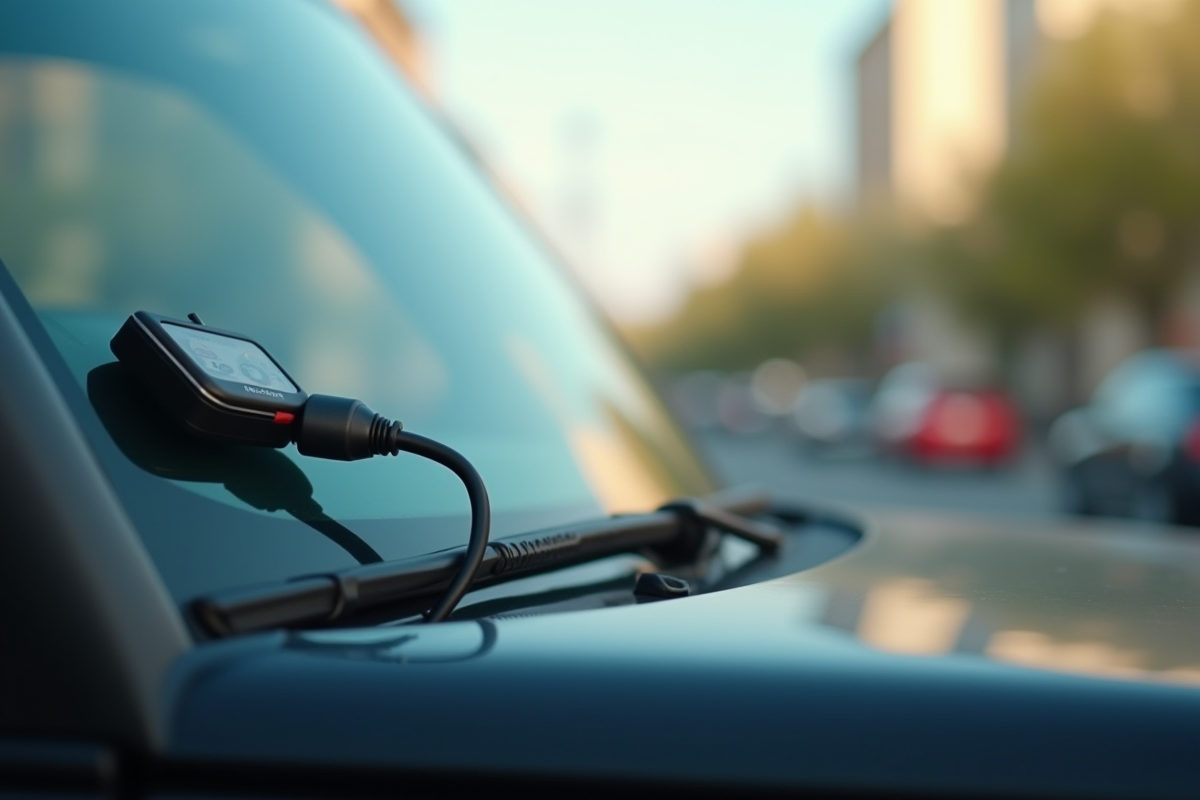
Connected insurance: data serving fairer rates and responsible driving
Now, data transparency redefines the relationship between drivers and insurers. Thanks to embedded technologies, everyone sees their premium calculated as closely as possible to their actual habits, sidelining traditional statistics related to age or seniority.
To illustrate how pricing is evolving, here are the main parameters considered in dynamic pricing:
- the speed measured throughout the trips,
- the total mileage over a specified period,
- the time periods of driving,
- the detection of risky behaviors or imprudence.
This system not only individualizes the bill but also encourages caution. Regular, smooth driving allows for concrete savings from month to month. Conversely, riskier behaviors are immediately reflected in the rate. For many drivers, the equation has become simple: better driving means paying less.
Insurance professionals also rely on personalized support made possible by intelligent data processing. Specifically, many insured individuals receive alerts in case of dangerous behavior, advice to improve their driving style, or precise feedback on their habits behind the wheel. The role of the insurer now extends well beyond simply paying in case of an accident. On their part, the databases managed by companies serve to strengthen controls and limit fraudulent behaviors.
To better understand the implications of this upheaval, here’s what is actually changing for the driver:
- A real-time adjusted premium, tailored exactly to their profile on the road
- Personalized encouragements to improve driving and targeted alerts in case of deviation
- A clear recognition of responsible behaviors, leading to immediate benefits
Today, every dashboard becomes a link in the system. Between the promise of fairness and legitimate concerns about privacy, society must decide: how far are we willing to let our journeys speak for us, in the name of a safer road for all?